
Charging your electric vehicle in Brussels
- How do I charge my vehicle?
- Where can I find a charging station?
- How do I pay?
It should come as no surprise that the simplest and most cost-effective way of recharging your electric vehicle is to use a home charging station. Unfortunately, this isn’t always an option for people living in a city like Brussels, where you might live in a flat or a house without private parking. Thankfully, there are alternatives for charging in public and on private premises. We’ve provided a brief overview of your options below.
How does electric charging work?
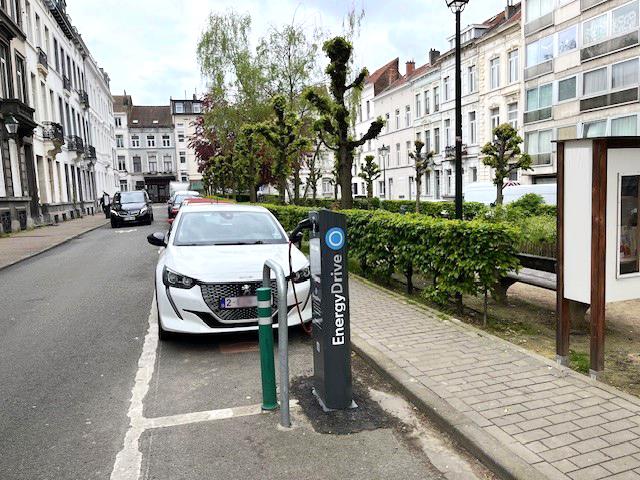
Just like your smartphone, your electric car’s battery needs to be recharged regularly. To do so, you need a charging point, a cable and either a charging subscription or – increasingly – a simple bank card.
Good to know
Charging via a standard power socket is strongly discouraged, both for safety reasons (risk of overheating) and because it is much slower.
To preserve battery life, it is best not to charge the battery to 100%. Most manufacturers recommend staying between 20% and 80% of capacity.
When it comes to charging stations, there are four options available:
- Home charging station: the best and cheapest option
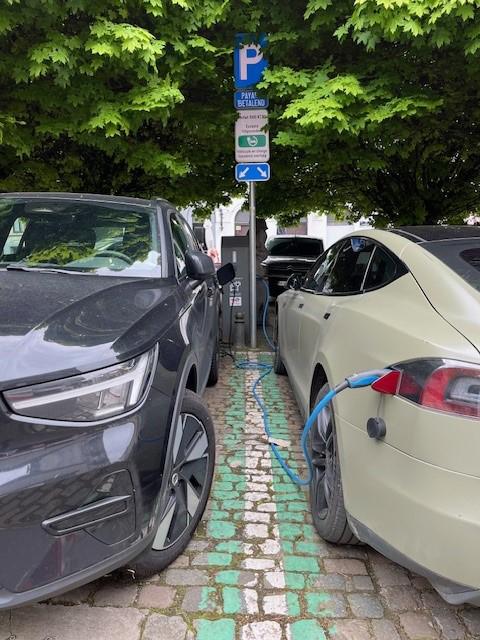
- Public charging station: on the street,either via subscription or directly with a contactless bank card
- Company charging station: provided by your employer under specific conditions
- Private charging station: less common, for example (often faster) chargers in retail parking areas
To charge at most public AC charging points, you need your own cable, except for certain fast chargers that provide fixed connectors. Different cable types exist, with CCS being the most common. As a result, not all chargers are compatible with every electric vehicle.
Note that cables cannot be stolen: during charging they are locked to both the vehicle and the charger and can only be disconnected by the person who started the session.
How fast is charging?
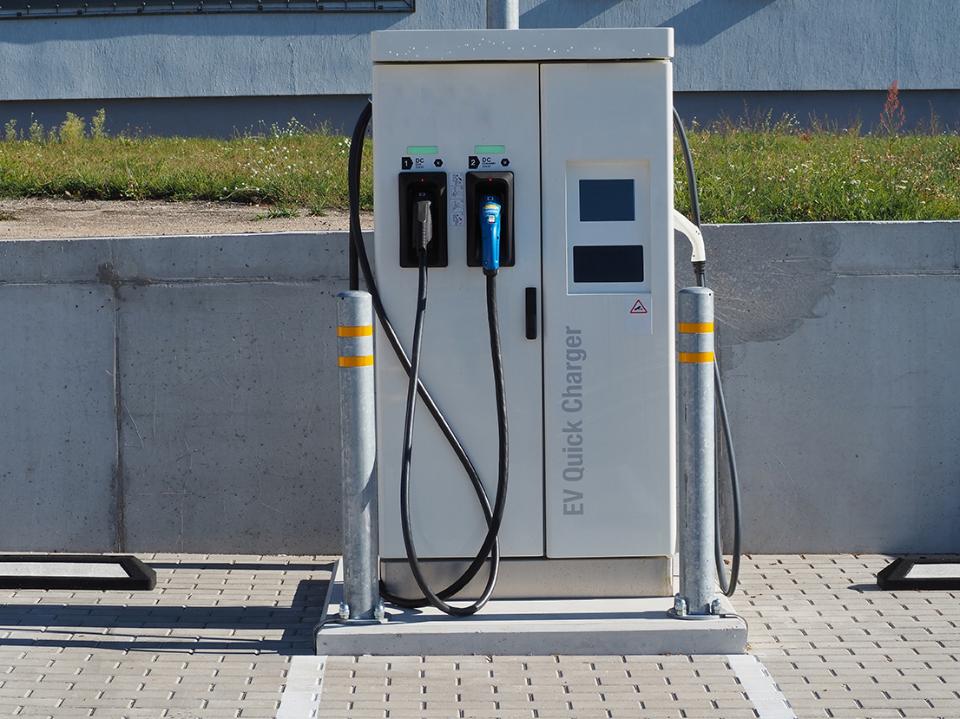
Depending on the power of the charger and the amount of energy needed, charging can take anywhere from a few minutes to 6 or 8 hours. A minimum of planning is therefore required.
Good to know: not all electric vehicles support fast charging. Always check this before purchasing a car, based on your driving and charging needs.
Most public charging points in Brussels deliver between 7 and 22 kW. Some fast chargers offer 50 kW. Higher capacities (150 to 350 kW) are relatively rare in the city and are mainly located along major traffic routes.
According to charging operators, the most common charging session amounts to 15 kWh, equivalent to around 100 km of range, depending on the vehicle:
- 2 hours on a 7.4 kW charger
- 1 hour 20 minutes on an 11 kW charger
- 40 minutes on a 22 kW charger
Where can I find a charging point in Brussels?
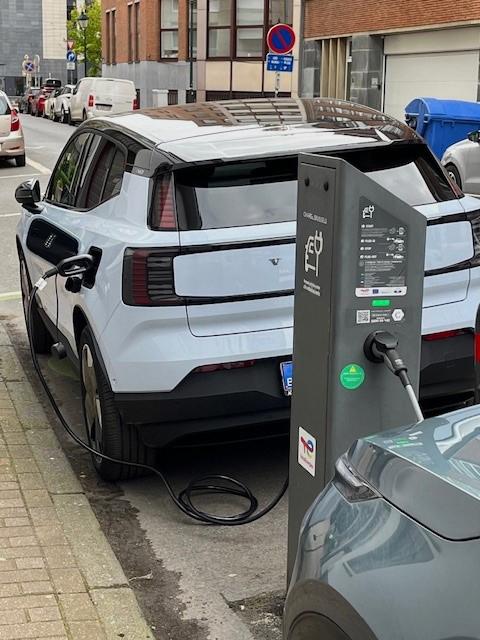
The Brussels‑Capital Region has launched an ambitious deployment plan under the name electrify.brussels. Its objectives include:
- one public charging point within 150 metres of every Brussels household
- 9,500 publicly accessible charging points by 2025
- 22,000 publicly accessible charging points by 2035
The electrify.brussels website features an interactive map listing all charging points in Brussels, including their power and real‑time availability. Similar information is usually available via your charging provider’s app.
By April 2026, Brussels had more than 10,700 charging points, twice as many as in 2024.
How do I pay for charging?
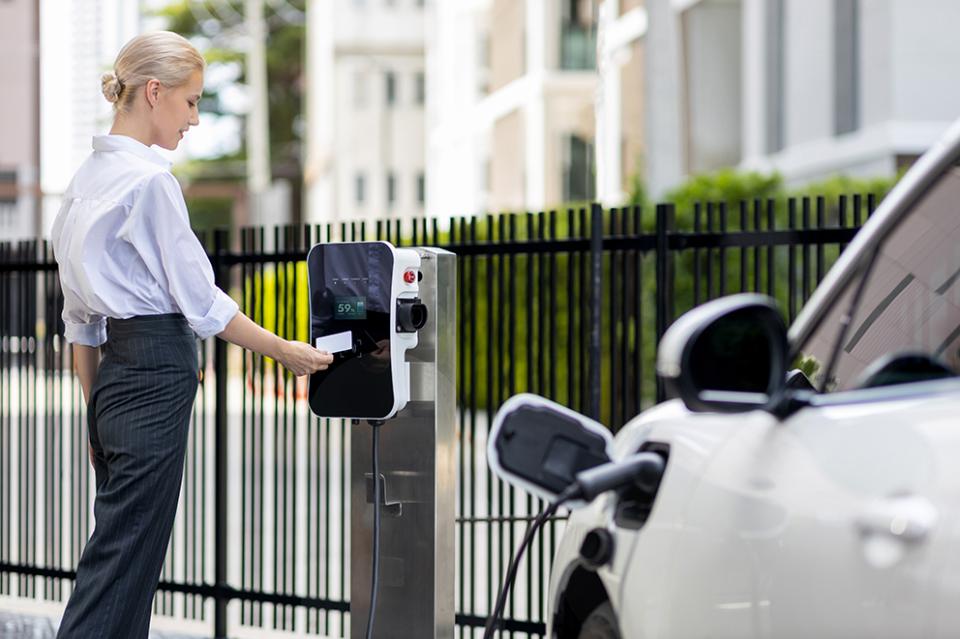
This is one of the areas that has improved the most in recent years.
All new public fast‑charging points must clearly display their prices and allow direct payment by bank card, without requiring a badge or subscription. Existing chargers must be compliant by 2027 at the latest.
European rules now require greater transparency:
- price per kWh
- any fixed fee per session
- per‑minute fees (occupancy time)
- a clear distinction between energy costs and parking or occupancy charges
In Brussels, this information must be displayed directly on the screens of chargers rated at 50 kW or more, or made available via QR code or app for lower‑power chargers.
Since 2025, reimbursement of home charging for company cars has also been standardised. Employers may reimburse charging costs without detailed invoices, based on a maximum flat rate per kWh set quarterly at regional level.
For Brussels (indicative): Q1 2026: 34.26 euro cents/kWh.
Parking at a charging station in Brussels
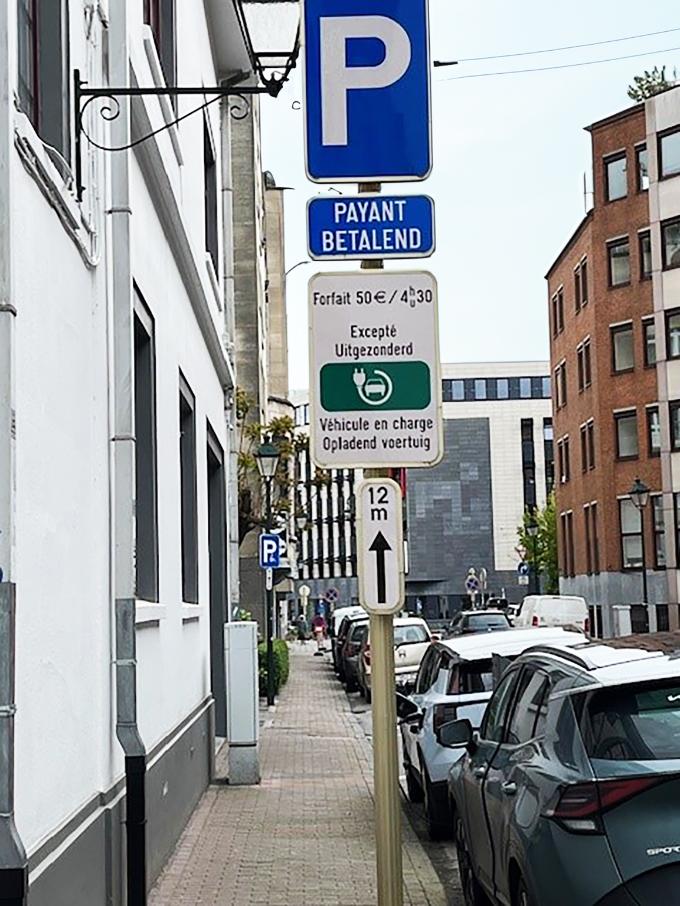
Here too, rules have evolved to promote fairer use of charging infrastructure and to put an end to “disguised free parking”.
Sibelga and the Brussels‑Capital Region have gradually introduced a system that distinguishes charging from parking by applying an occupancy fee once charging is complete, sometimes higher than the regular parking rate.
Finally, note that scan cars operating in most Brussels municipalities can detect whether a vehicle is actively charging and issue fines where applicable.
KBC Guide to Driving Electric Vehicles
Are electric vehicles the right choice for the people of Brussels? Despite the issue of access occasionally being more complicated for these vehicles, the answer remains yes, especially as things are generally getting better and more user-friendly. The vast majority of Brussels residents have access to at least two of the three possible recharging solutions (home, company, public), and even if drivers can’t recharge at work or at home, proper organisation and planning should make it possible for everyone to find what they need. After all, when mobility is as complex as it is in Brussels, getting by is a way of life!
To help you navigate these challenges, KBC has developed a platform that identifies your needs, provides you with personalised advice and recommends a range of vehicles to suit your situation. Check out our Guide to Driving Electric Vehicles.
Want to switch to an electric vehicle?
KBC Brussels has all kinds of beneficial financing options available for both private customers and company cars. What’s more, everything can be arranged online!